Start with a question the customer would ask
A demonstration-led campaign begins with something a potential customer wants to see for themselves. Can the storage box fit on a narrow shelf? How easily does the notebook lie flat? What does the repair service involve? The best question is specific enough to answer visibly and relevant enough to matter before someone buys or books.
Write down several questions, then choose one that your product or service can answer honestly in a short sequence. Avoid starting with the most visually dramatic action if it does not address a real decision. A close-up of a beautiful package may attract attention, but it does not demonstrate how the item works. The campaign needs an action people can understand, not just an attractive image.
Choose one action and one takeaway
Suppose a small stationery shop sells a refillable notebook. A broad concept such as “a notebook for every idea” leaves the team with many possible images but little direction. A demonstration offers a narrower starting point: show someone removing a finished insert and putting in a new one. The takeaway might be, “Keep the cover; change the pages.” That sentence gives the action a purpose without asking the demonstration to prove more than it can.
Define the beginning and end of the action before developing visuals. What must viewers see to understand the change? Which detail would be confusing if omitted? For the notebook, the sequence might show the full cover, the old insert coming out, and the new insert sitting securely inside. If the mechanism needs several careful steps, do not edit them into an apparently effortless motion. Clarity is more useful than an exaggerated impression of speed.
This action becomes the campaign’s organizing idea. It is not a requirement to use identical footage everywhere. It is a decision that each execution should help answer the same customer question.
Give the demonstration a creative frame
A demonstration shows what happens; a campaign concept gives people a reason to remember it. Look for a simple frame that fits the action. The refillable notebook might follow the idea “A new chapter, the same cover.” That frame connects the visible change to a familiar moment: finishing one project and starting another. It can guide the headline, image selection, and order of information without replacing the demonstration itself.
Keep the frame close to what the audience can actually see. If the campaign calls the notebook “endlessly reusable,” but only shows one replacement and the cover has a limited lifespan, the language reaches beyond the evidence. A restrained line can be more persuasive because viewers can connect it directly to the action. Before committing, ask whether someone who saw only the demonstration would understand why the headline belongs beside it.
Adapt the idea without changing its meaning
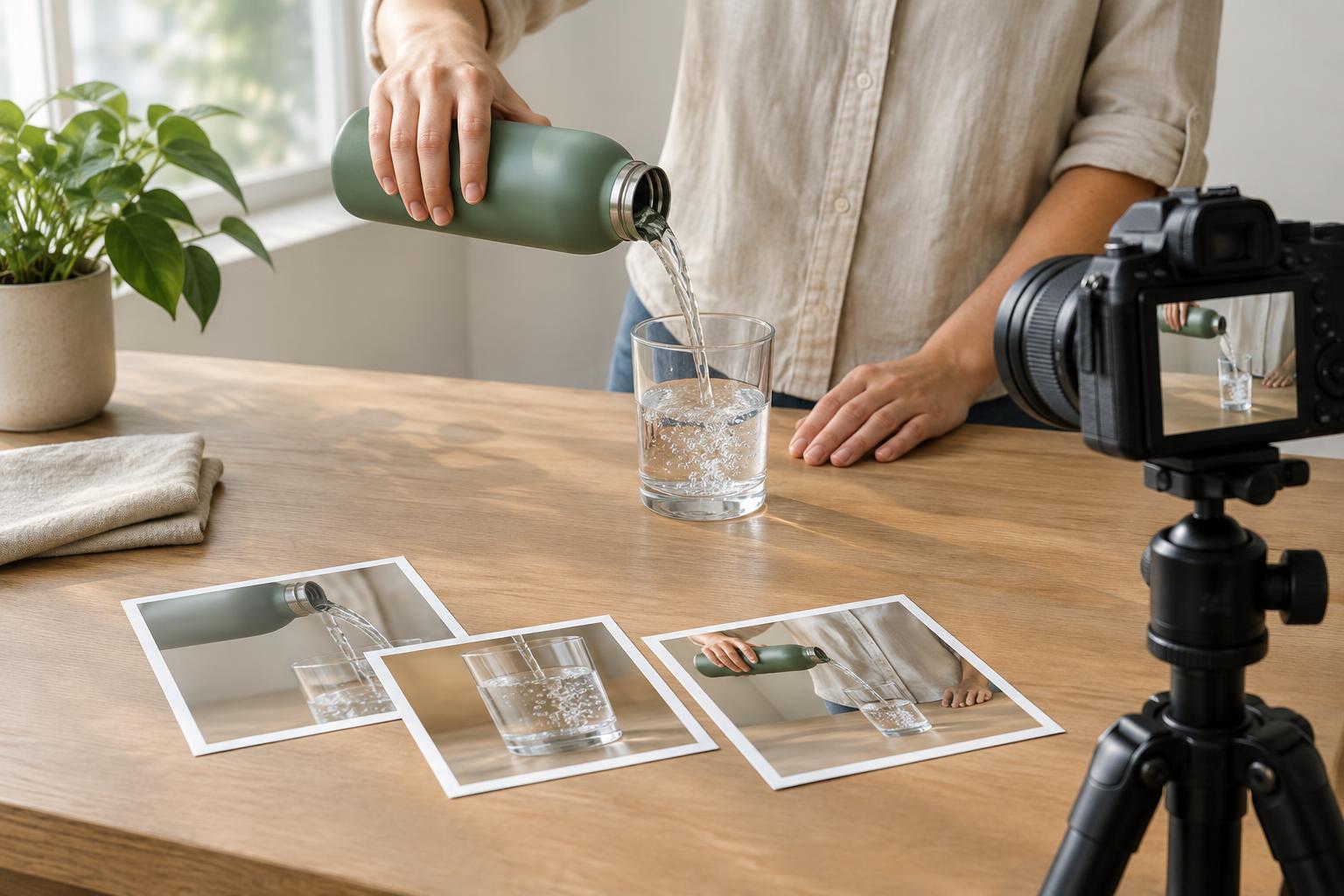
Plan a small set of executions around the same action. A short video can show the full replacement sequence. A printed card can use three still images in order. A shop-window display could show the cover beside two inserts, with a brief caption explaining what changes. Each format has different strengths, but all should make the same point: the pages can be replaced while the cover stays.
Make a simple asset list before production. Note the opening view, the key movement, the finished result, a legible product view, and any necessary explanatory copy. Capture a little more context than the shortest format requires; a hand blocking the mechanism in every close-up can make later edits difficult. If someone else will make the assets, share the customer question, the intended takeaway, and the details that must remain visible—not just the campaign line.
This approach also gives the team a way to reject attractive but unrelated ideas. A lifestyle image may still belong in the campaign, but if it becomes the main image, check that the demonstration remains easy to find. The creative frame should support the proof, not hide it.
Check what the demonstration actually promises
Review the finished work as a customer would, without the production brief. Is it clear what product is being used? Can viewers tell what changes and what stays the same? Are cuts, captions, or camera angles creating an impression the real experience would not support? These questions apply just as much to a service: show the part of the process you can represent accurately, and explain what varies from one job to another.
A useful final test is to separate three things in the draft: what the audience can see, what the copy says, and what someone would still need to ask. If a claim depends on a detail the demonstration does not show, either add that detail, qualify the wording, or leave the claim out. A demonstration-led concept works best when its memorable idea and its visible evidence tell the same story.