Start with one useful idea
A campaign theme is the idea that connects a series of messages. It is not simply a slogan placed on every asset. A strong theme gives people a consistent reason to pay attention, while leaving room for each channel to do its own job. Before choosing words or visuals, write a short brief: who is the campaign for, what are they being invited to do, and what makes that invitation relevant to them?
For a hypothetical neighborhood plant shop, the campaign might focus on helping people find a plant for the space they actually have. That is more useful than a broad promise to “bring nature home.” The idea can support a window display, a short video, an email and a printed care card. Each piece can address a different question while belonging to the same campaign.
Build a theme with room to move
Turn the central idea into a simple campaign sentence that the team can use as a guide. For the plant shop, that might be: “There is a plant for your place.” The sentence does not have to appear in every execution. Its purpose is to keep the work focused on matching plants to real rooms, routines and light conditions.
Next, define a small set of repeatable elements. These could include photographs showing plants in modest, believable spaces; headlines that begin with a familiar household situation; and a consistent way to display practical details such as light needs. Repeat enough to make the campaign recognizable, but avoid locking every design into the same layout. A social post may need a quick visual hook, while a care card needs legible instructions.
Give each channel a distinct task
List the channels you plan to use and what someone is likely to need at each point of contact. A poster seen from a distance needs one clear thought. A social carousel can show several room-and-plant pairings. An email can explain how to choose between options. An in-store sign can help a visitor act on the idea while standing beside the products.
This changes how you write the message. A shop-window headline might ask, “Low light? Start here.” A social post could show a shelf and describe the kind of plant that might suit it. An email might offer a short checklist about space, light and care time. The words differ, but all three help people find a plant for their place. Repeating one paragraph across every channel would be consistent on the surface and less useful in practice.
Check the theme in real formats
Before producing a full set of assets, make rough versions of three very different pieces: perhaps a small social image, a printed poster and an email header. View each at approximately the size and speed at which someone would encounter it. Can the poster be understood at a glance? Is the social image clear on a phone? Does the email subject line make sense without the photograph?
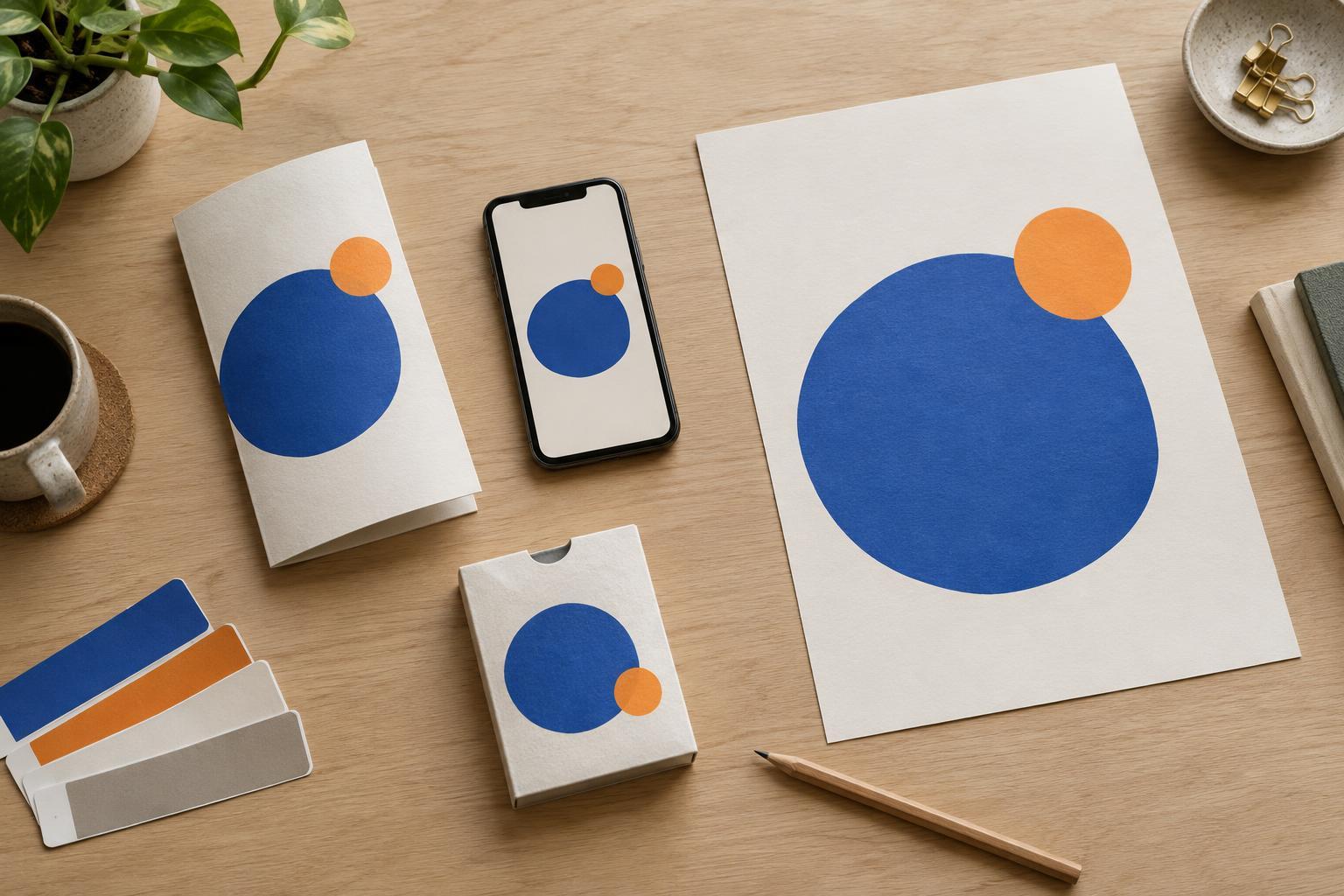
Then place the pieces side by side. If they feel unrelated, identify what is missing: the central idea, a shared visual cue or a consistent tone of voice. If they feel mechanically identical, give each one a more specific task. Also check practical constraints early, including text length, image crops, print contrast and space for a call to action. A theme is only flexible if it survives those ordinary production decisions.
Keep a simple campaign guide
A short guide can prevent the theme from drifting as more assets are made. Record the campaign sentence, the audience, the action you want people to take, the main visual and verbal cues, and two or three examples of what does not fit. For the plant shop, a generic discount announcement with an unrelated product photograph might be off-theme, even if it uses the right colors.
Finally, review each new piece with two questions: does it serve its channel, and does it still express the campaign idea? Both answers matter. The aim is not perfect uniformity; it is a family of useful messages that people can recognize across different moments and formats.