Start with the job each photo needs to do
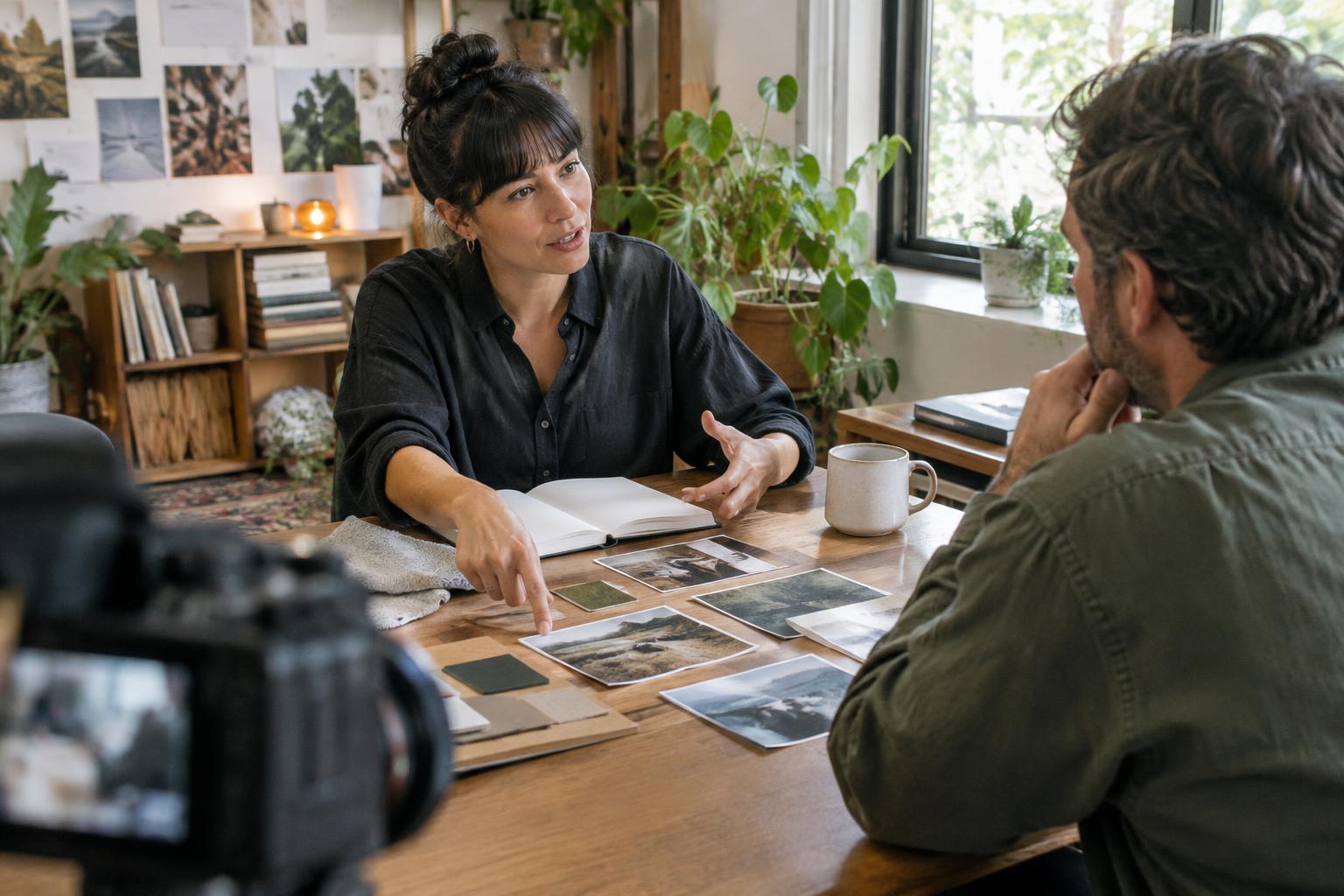
Before asking anyone to step in front of a camera, decide where the photographs will appear. A website banner may need space for a headline; a team page needs recognizable faces; a service page may benefit from hands at work. Make a short shot list that names the subject, action, setting and intended use for each image. “Owner preparing an order at the worktable, with clear space on the left for copy” gives everyone more direction than “natural workshop photos.”
Share the plan with participants ahead of time. Tell them roughly how long they will be needed, what they might do and whether they should bring clothing options. Choose outfits that fit the business and the activity rather than dressing everyone alike by default. If customers or other visitors might be photographed, make sure they know what is planned and have a genuine opportunity to decline. Keep an alternative shot in mind so the schedule does not depend on any one person.
Make the set feel manageable
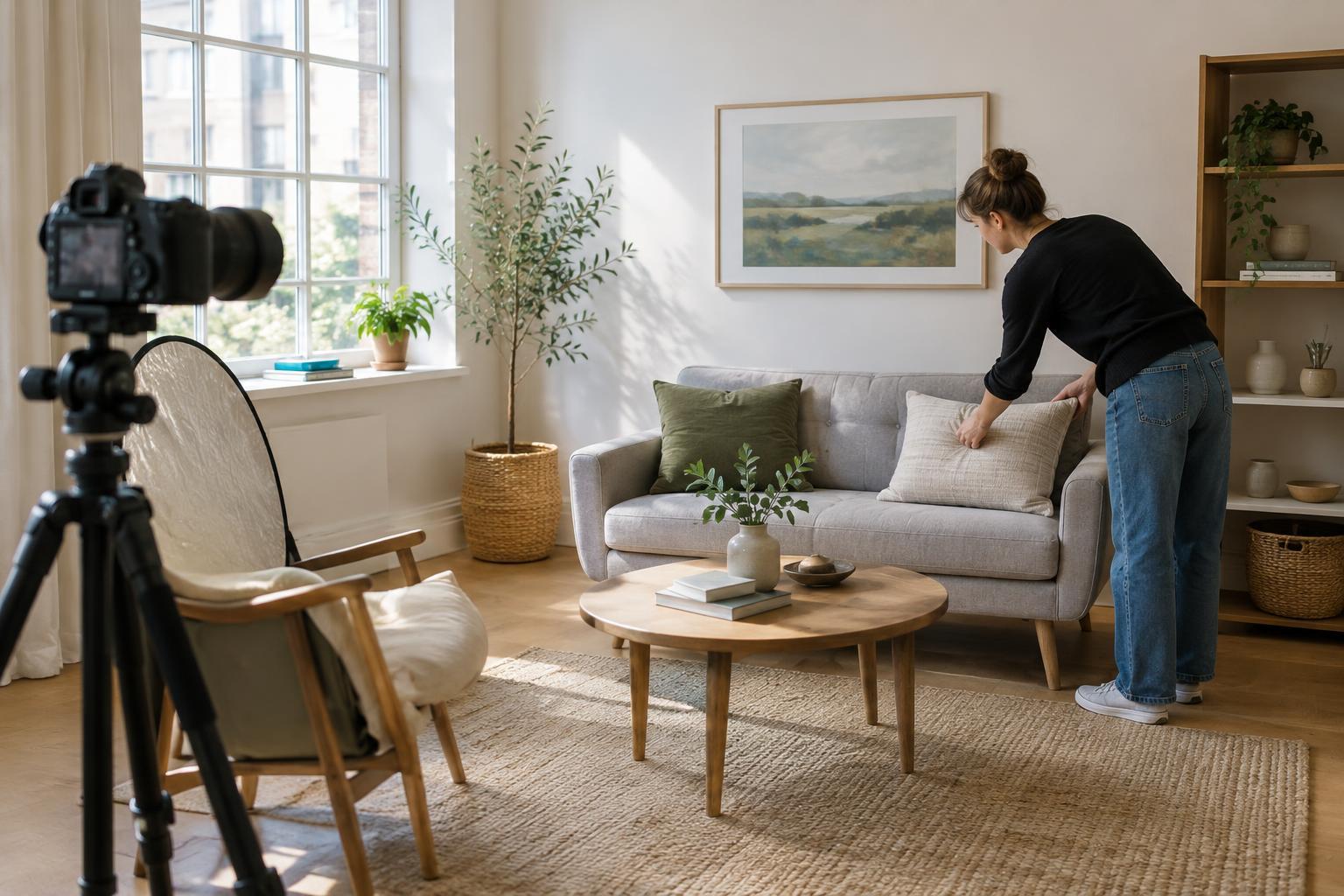
Most people feel less self-conscious when they know what will happen next. Begin with a quick tour of the shooting area and explain that you will make small adjustments as you go. Clear distracting objects from the frame, check that the workspace is safe to use and set up the camera and lighting before calling someone over. If possible, limit the audience around the camera; a crowd of colleagues watching can make a routine task feel like a performance.
Start with an activity the person knows well, such as arranging a display, greeting a colleague or packing a product. Give them time to settle into it before seeking a portrait. A simple setup near a window or with one consistent light source often makes direction easier: you can concentrate on the person instead of repeatedly interrupting to rebuild the scene. Let participants take breaks, especially if they are also doing their regular work.
Direct actions, not expressions
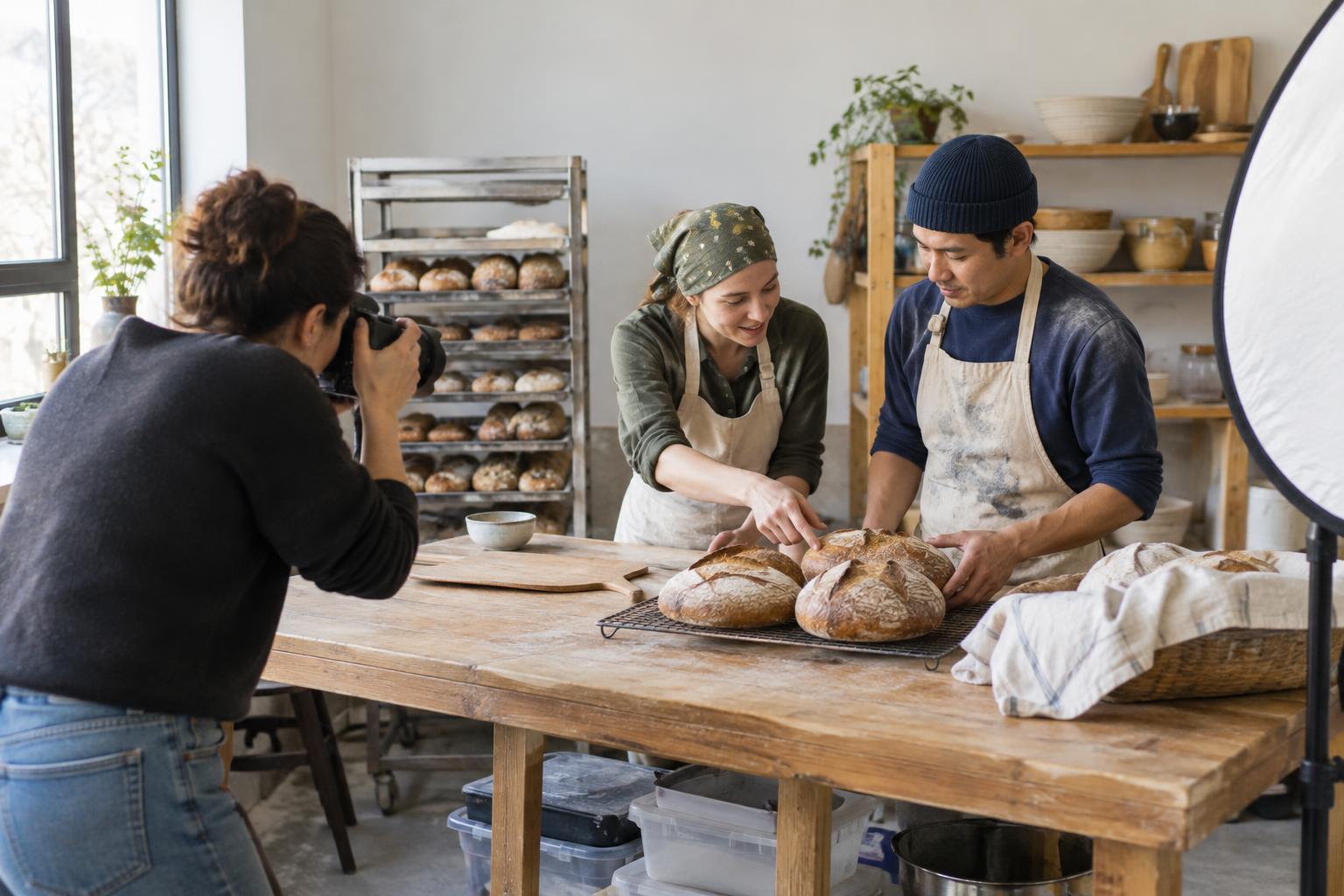
“Look natural” is a difficult instruction to follow. Give one small, physical prompt at a time: “Turn the label toward me,” “Place that item on the shelf,” or “Tell Sam what you check before this goes out.” The person has something to do, and you have a moment to photograph. If the action needs repeating, explain why: “That worked; let’s try it once more with the box a little closer to the table edge.”
For a portrait, start with where the person should stand, where to put their hands and where to look. Then adjust in small steps. You might ask them to rest a hand on the counter, shift their weight or look briefly toward a coworker before looking at the camera. Avoid a stream of vague corrections or comments about someone’s appearance. Describe what the photograph needs instead: “I’m moving this chair so your face is easier to see.”
Keep the conversation useful and respectful
A calm voice and specific feedback help people understand when something is working. “That position shows the process clearly” is more useful than repeating “Perfect!” after every frame. Show an occasional preview if it helps a participant see the composition, but do not turn every pause into a review session. If someone dislikes a pose, offer another way to make the same image rather than pushing them to continue.
Be attentive to how the business is represented. Do not ask someone to pretend to perform a task they cannot do safely, and do not stage interactions that could mislead viewers about a product or service. A founder explaining a process beside a colleague may be a stronger image than an artificial handshake. If you need a posed promotional scene, keep the action plausible and explain to participants how the image may be used.
Check variety before you wrap
Pause midway through the shoot to compare the images with the shot list. Check for sharp faces, readable products, distracting backgrounds and enough room for text where needed. Capture a mix of wide scenes, medium views and close details, along with both horizontal and vertical compositions when the planned uses call for them. Take a few quiet frames between directed actions; these may provide useful alternatives without requiring someone to hold a pose.
Finish by confirming that you have the essential images, not by exhausting every possible variation. Thank participants, explain what will happen to the photographs next and note any images they have asked you not to use. Good direction is not about making nonprofessionals act like models. It is about preparing the scene, giving people clear tasks and leaving room for their familiarity with the business to show.