Start with the job the copy needs to do
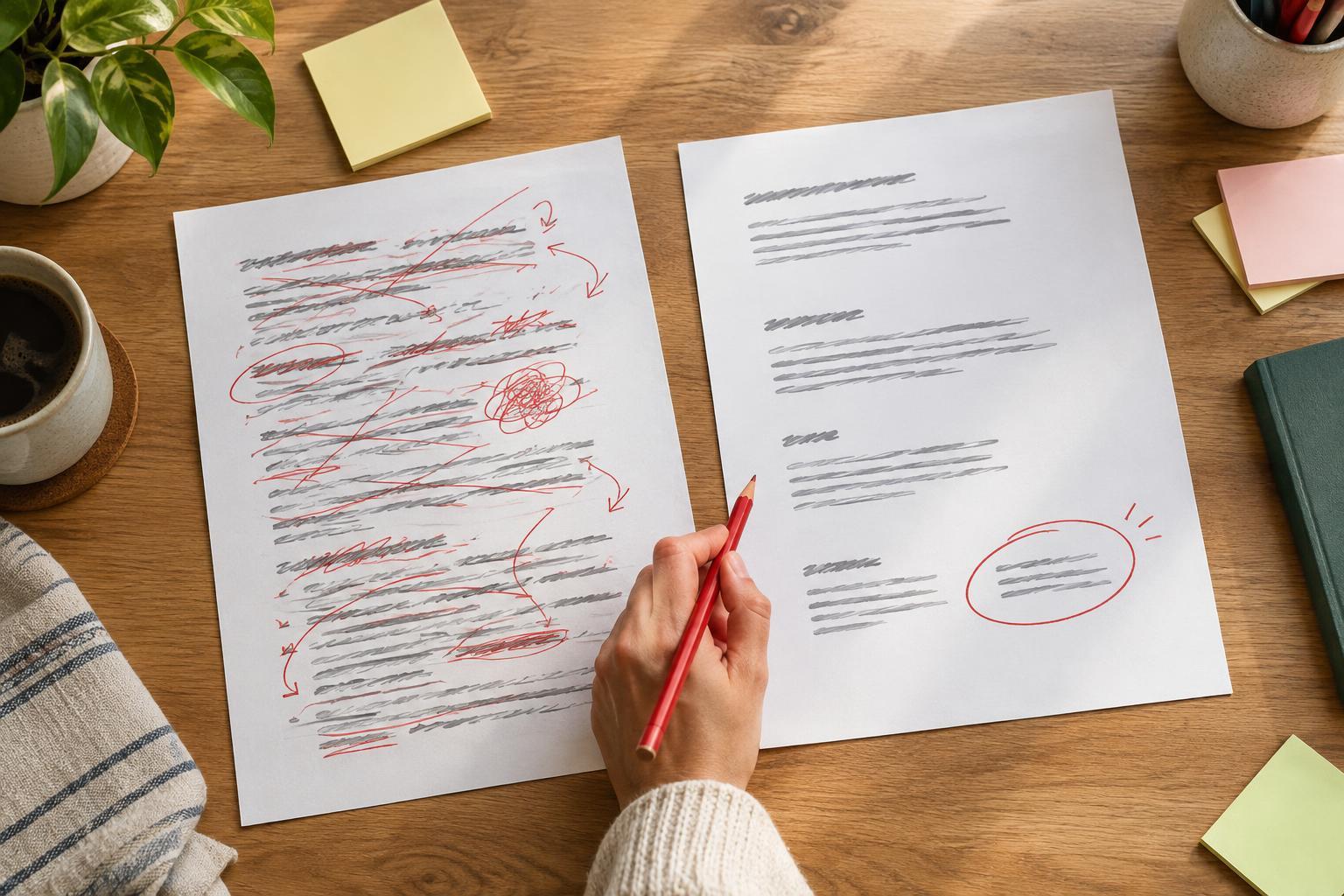
Before changing a sentence, write down what the piece is meant to accomplish. A product page might need to explain a feature and help someone decide whether it fits their needs. A poster might need to communicate one idea at a glance. These are different editing jobs, even if both use the same brand voice.
Identify the intended reader, the main message, and the next useful action. Then read the draft without touching it. Can you find the main point quickly? Does each paragraph help the reader understand it or act on it? If not, the problem may be structure rather than wording. Move the essential information forward before polishing individual lines.
For example, an event announcement that opens with a long description of the organizer may bury the details readers came for. Put the event, place, and reason to attend first; give background only where it adds useful context. Editing in this order prevents you from perfecting sentences you will later remove.
Make meaning clear before making sentences short
Clarity begins with specific language. Replace vague promises such as “solutions for your needs” with a description of what the product or service actually helps someone do. Choose familiar words when they carry the meaning accurately, and explain any term your audience may not know. Specificity also keeps a brand from sounding like every other business in its category.
Check each sentence for a clear subject and action. “Your order is packed by our team after payment is confirmed” may be easier to follow as “We pack your order after we confirm payment.” The revision shows who does what without changing the underlying promise. Active voice is often helpful, but it is not a rule to apply mechanically; sometimes the result matters more than the actor.
Look closely at words such as “this,” “it,” and “they.” If a reader has to work out what one refers to, repeat the noun. Read instructions in the order someone would follow them. A sentence can be grammatically correct and still be confusing if it introduces an exception before the basic step.
Cut repetition, not useful detail
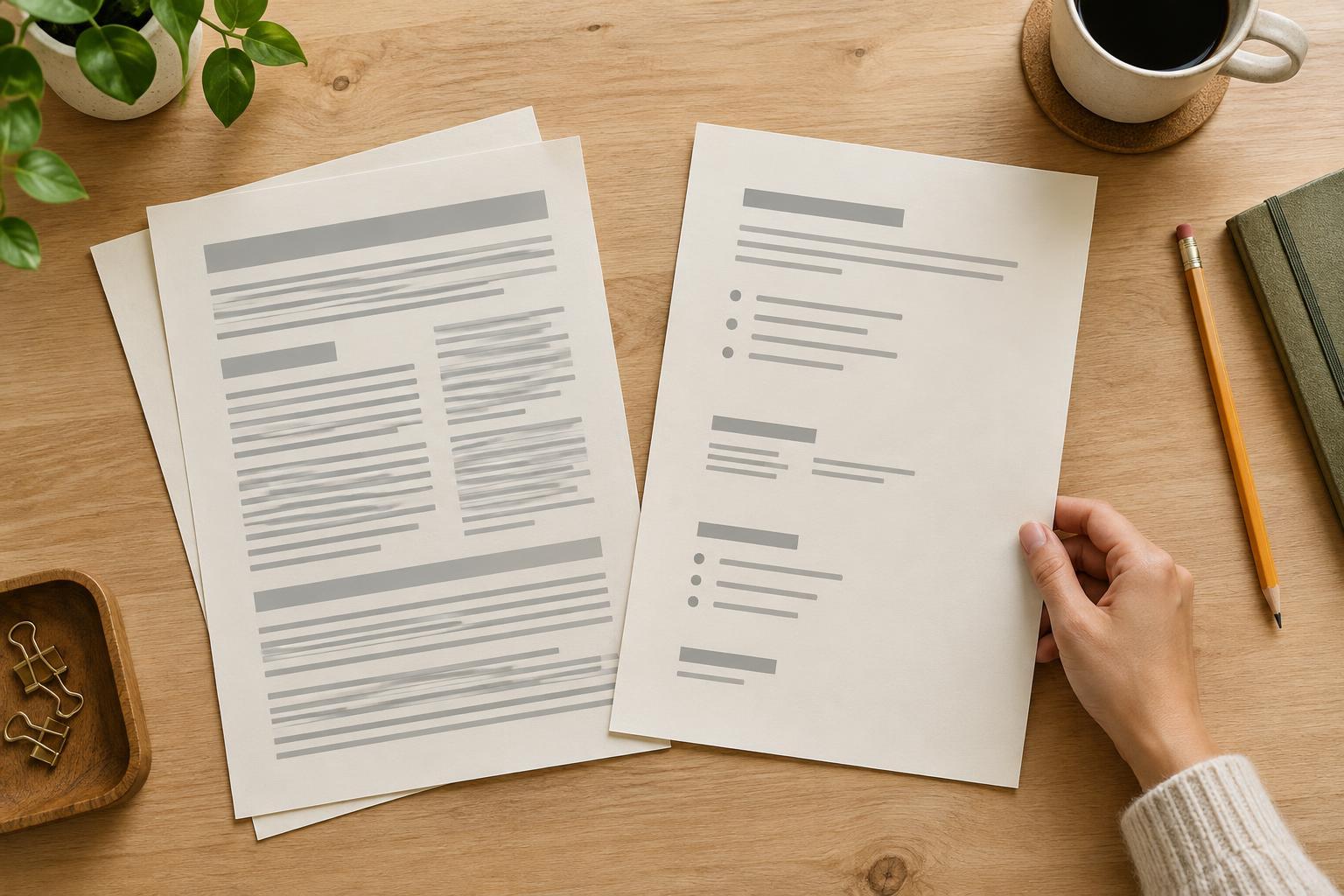
Once the meaning is clear, look for places to shorten the copy. Remove sentences that repeat the headline, introductory phrases that delay the point, and adjectives that do not help a reader distinguish one option from another. “Our convenient and easy-to-use booking form lets you quickly book online” could become “Book online using the form.” The shorter version works if the surrounding page already makes the service clear.
Do not cut the details that help someone make a decision. Sizes, materials, eligibility, timing, limitations, and what happens next may be more valuable than a punchy phrase. Brevity means giving readers what they need without making them sort through what they do not.
A useful test is to delete a phrase and reread the passage. If the meaning, tone, and necessary detail remain, leave it out. If the copy becomes ambiguous or abrupt, restore it or write a better transition. Short copy is not automatically good copy; it still has to answer the reader’s likely questions.
Keep the voice steady across formats
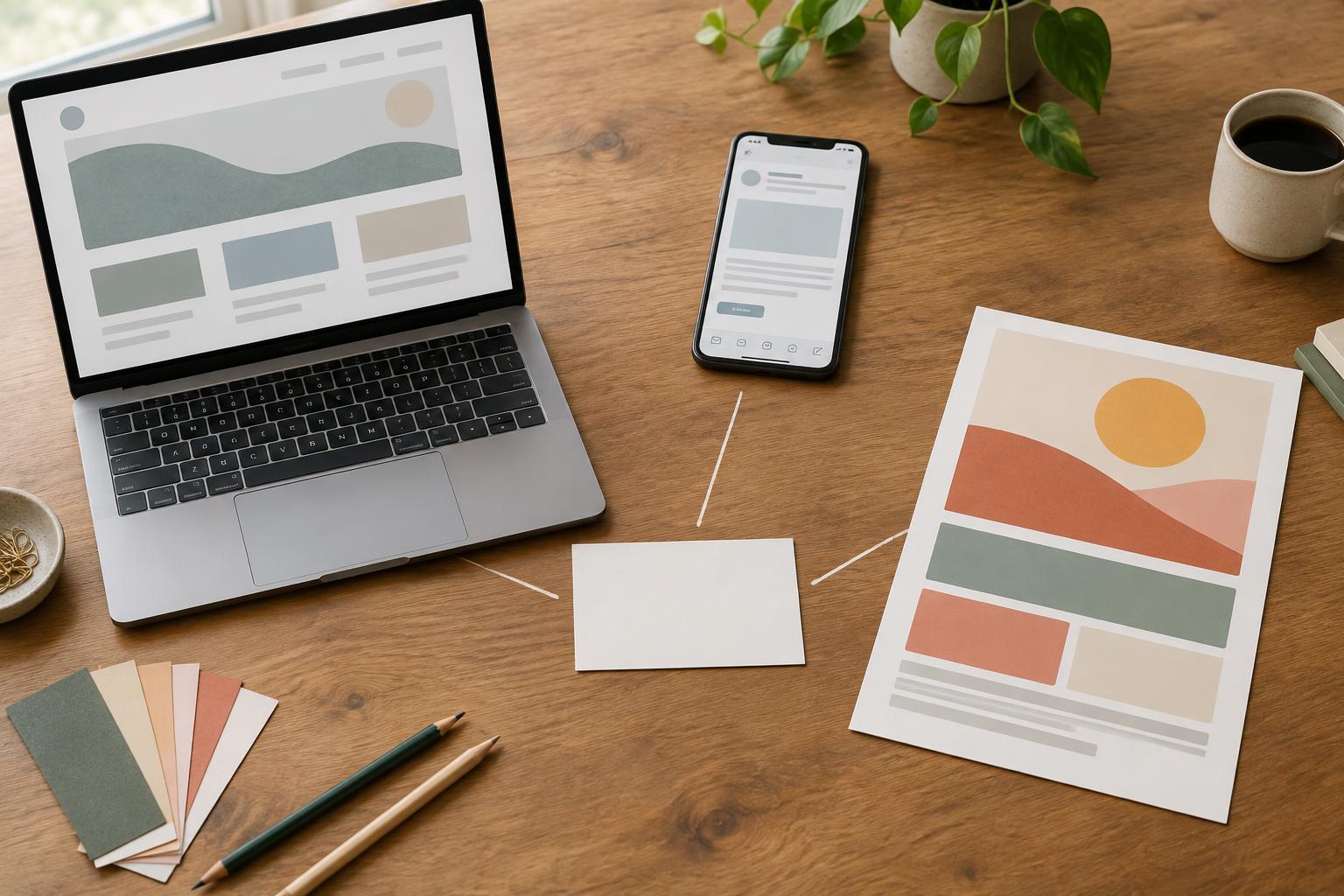
A consistent voice is a recognizable way of speaking, not a demand that every sentence sound identical. A brand can be warm in an email and direct on a sign while remaining recognizably itself. Define the voice in usable terms: perhaps plainspoken rather than formal, confident rather than boastful, and welcoming rather than overly familiar. Add a short example of what each choice sounds like.
When editing, check word choice, sentence length, humor, and how the copy addresses the reader. If most of the brand’s writing says “you,” an unexplained shift to “valued customers” may feel distant. If the brand usually makes measured claims, an exaggerated slogan may feel out of place. Adjust the line without sacrificing the message the format requires.
Keep a small record of recurring decisions, such as how to name products, write calls to action, and handle technical terms. This helps different writers make compatible choices. It is more useful than a list of vague instructions to “sound friendly” or “be bold.”
Finish with a reader-focused pass
Give the draft one final read in its intended setting. Copy that works in a document may be too long for a mobile screen, an image caption, or a printed label. Check headings and calls to action on their own: a reader who scans them should still understand the path through the piece. Read the body aloud to catch tangled sentences and accidental changes in tone.
Then verify the details against the information available for the project. Check names, specifications, prices, instructions, and any promises about what a customer will receive. Editing for style should never make a claim stronger than the facts support. If a detail is uncertain, ask for confirmation or phrase the copy without it.
Finally, compare the edited version with the original brief. Is the main message easier to find? Is every remaining sentence doing a job? Does the piece still sound like the brand? Those questions make the final pass purposeful, whether you are editing a single button or an entire campaign.