Start with the reader’s task
People do not always read a page from the first word to the last. A visitor looking at a service page may first want to know what is included, whether the service fits their needs, and how to get in touch. A reader scanning a flyer may be looking for a location or a simple reason to keep reading. Scannable copy puts those answers where they are easy to find.
Before changing the layout, write down the questions your reader is likely to bring to the page. Then put the answers in a useful order. For a photography service page, that might mean describing the type of photography, explaining what a booking includes, and ending with a clear next step. Headings, lists, and short paragraphs work best when they support that order; they cannot fix a message that wanders between unrelated ideas.
Make headings say something useful
A heading is a signpost, not just a place to add larger type. Labels such as “What We Do” or “More Information” may fit almost any page, but they give a skimming reader little guidance. A heading such as “Product photographs for online shops” identifies the subject immediately. “What to prepare before your shoot” tells the reader what they will learn in that section.
Keep headings specific without making them carry the whole paragraph. If a section explains the steps in a custom print order, “How the print process works” is enough; the copy below can cover artwork checks, proofs, and production. Use a consistent style across the page so readers can recognize the hierarchy. For example, if your main headings name topics, avoid switching halfway through to vague slogans. A reader should be able to glance at the headings and understand the page’s path.
Use lists when readers need separate items
Lists are helpful when several points have equal weight: what is included in a package, what a customer should send, or what happens at each stage of a project. They make individual items easier to locate than a long sentence joined by commas. On a design brief page, “Send your logo, preferred dimensions, final copy, and any required images” is understandable. If each item needs its own explanation, separating them into a list would make the instructions easier to follow.
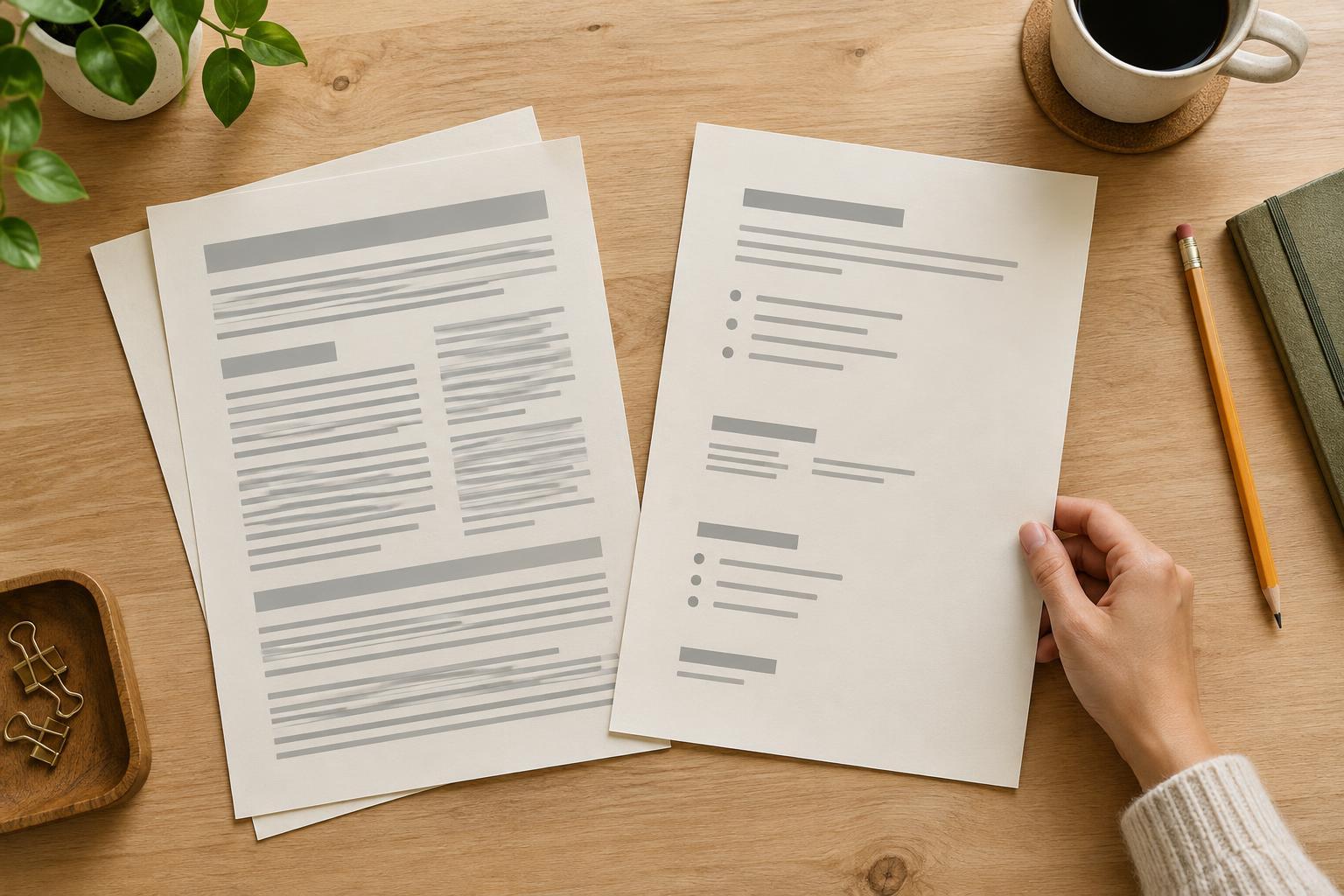
Choose the list format to match the information. A numbered list suggests an order, so it suits a process such as submitting a brief, reviewing a proof, and approving the final file. An unnumbered list suits items that can be checked in any order. Keep each item focused on one idea, and try to begin similar items in a similar way. Do not turn every sentence into a list: a short paragraph is often better when the ideas need context or a natural connection.
Give each paragraph one clear job
Short paragraphs create pauses and help readers spot changes in thought. They are especially useful on narrow screens, where a modest block of text can appear much longer. But “short” is not a target to pursue at the expense of meaning. A one-sentence paragraph can emphasize a next step; a longer paragraph may be needed to explain a decision or limitation.
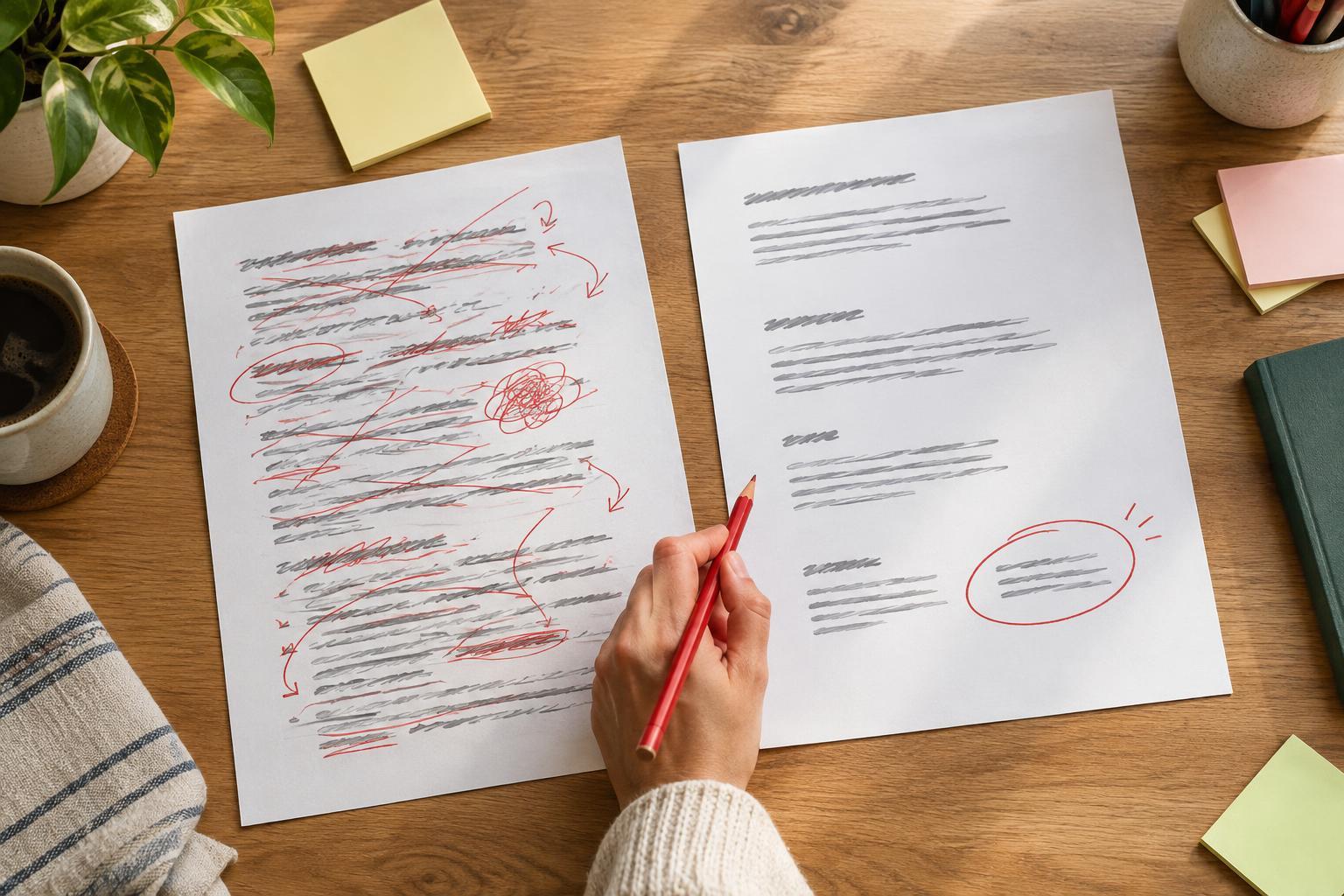
When editing, look for paragraphs that answer more than one question. A paragraph that describes a product, lists delivery options, and explains how to order is doing several jobs. Split it where the subject changes, then consider whether one of those subjects deserves a heading. Read the result aloud: if each paragraph has a clear purpose and the transitions still make sense, the breaks are helping rather than simply adding space.
Check the page in two passes
First, scan the draft without reading every sentence. Can you find the main offer, important details, and next step from the headings and visible structure? If not, revise the labels or move essential information closer to where a reader would expect it. For a workshop announcement, for instance, the subject, intended audience, and booking instruction should not be buried in a closing paragraph.
Then read the copy straight through. Lists should not repeat the paragraph that introduces them, and headings should not promise information the section never provides. Check that any short paragraph still connects to what comes before and after it. The aim is not to make readers skip the copy. It is to give them a clear route into it, whether they need one answer quickly or want to understand the whole offer.